Personalized Agents Need Real Infrastructure
Personalized AI agents are moving from novelty to operating system. Axios recently reported that more than half of one executive team had already built personal chief-of-staff agents connected to email, to-do lists, goals, and meetings without waiting for an IT rollout. The shift is bigger than productivity: agents are becoming a management layer for real work.
But once an agent becomes useful, the bottleneck stops being model quality and becomes infrastructure. Research on the agent economy argues that autonomous agents need permissionless participation, trustless settlement, and machine-to-machine micropayments to function as real economic actors. Other work on inter-agent trust points in the same direction: trust in agentic systems cannot rely on brand alone; it has to be built into the protocol itself.
OptimAI Persona Agent: https://optimai.im/download
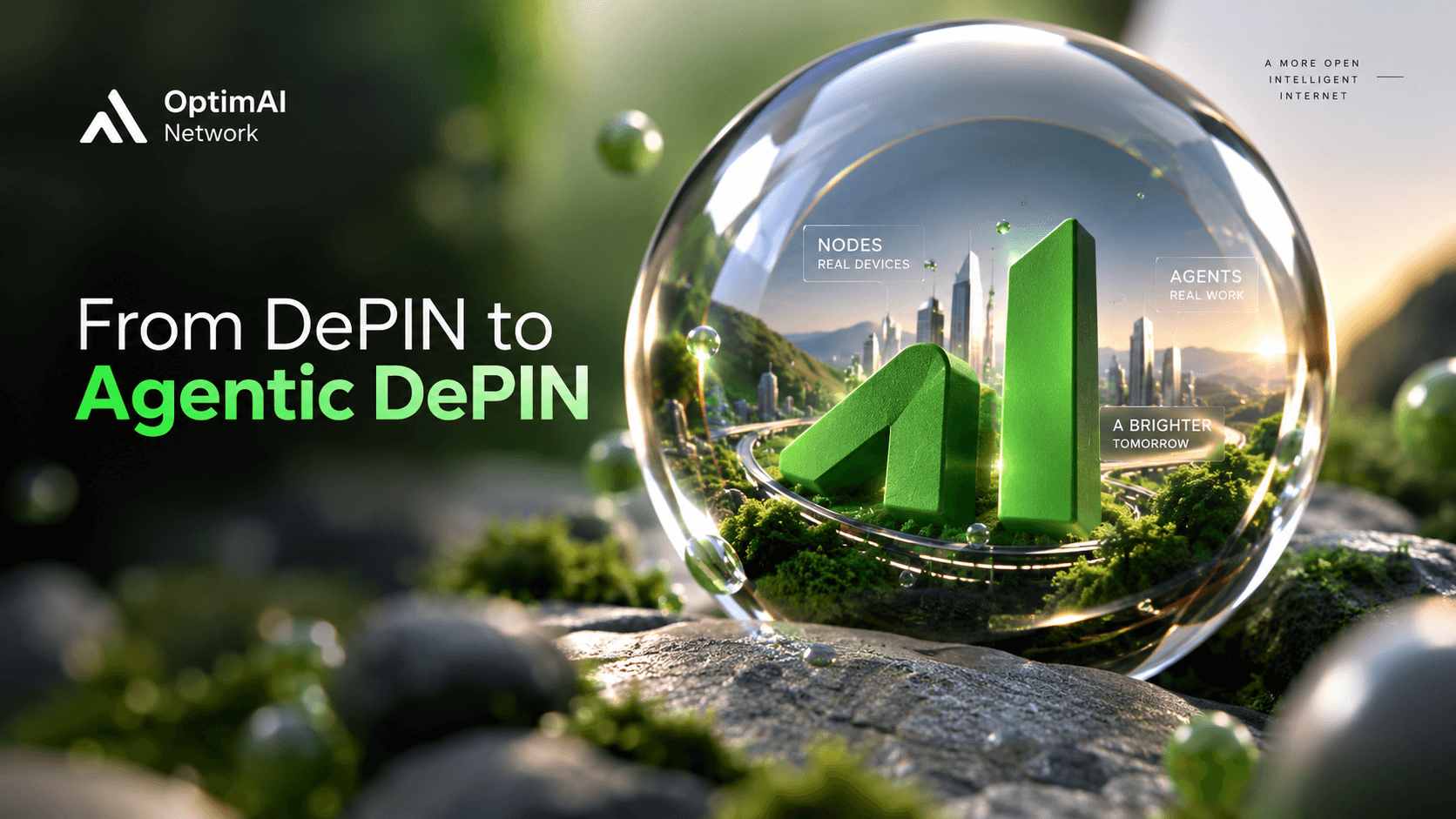
That is the problem OptimAI is built around. We are building the agent-native internet as a decentralized real-time intelligence network: live, validated, community-powered, and designed for autonomous systems that need current context instead of stale indexes. Our architecture is built around freshness, coverage, trust, access, and decentralization, so agents can search, act, and learn continuously on the open web and social web.
From there, personalized agents become much more than chat interfaces. OptimAI Persona Agent turns expertise into a reusable unit of intelligence: a persona, a knowledge base, a workflow, and a voice that can persist over time. OptimAI Claw extends that same idea into execution, turning context into action rather than leaving the user to stitch every workflow together manually. In other words: live context from Search, specialized identity from Persona Agent, and real execution from Claw.
Launch OptimAI Claw right in Core Node v2: https://optimai.network/optimai-nodes#nodes
That matters because most AI products still break at the handoff. They can draft, summarize, or suggest, but they do not close the loop. A real personal agent should gather context, reason over it, and act across tools without forcing the user to jump between tabs, apps, and fragmented systems. That is why the combination of Search, Persona Agent, and Claw is so important: it gives the agent a live world to understand, a clear identity to operate with, and a runtime that can actually get things done.
The next layer is economic. As agents begin to request services, access data, and transact on behalf of users, payment has to become native too. x402 repurposes HTTP 402 “Payment Required” into a web-native micropayment flow, allowing clients and agents to pay programmatically inside the request itself. That is the direction agentic systems are heading: not a separate checkout page, but a seamless request-to-access loop.
OptimAI Search: https://search.optimai.network
That is also where AgentFi starts to become real. If a personalized agent can reason, act, access paid context, and settle value natively, then it stops being a productivity tool and becomes an economic actor. OptimAI is building toward that future: a live intelligence backbone, a personal execution layer, and a network where specialized intelligence can eventually be reused, distributed, and monetized across the community.
The next wave of AI will not be won by the cleanest chatbot. It will be won by the stack that lets people turn expertise into agents, agents into action, and action into value. That is the vision behind OptimAI Persona Agent and Claw: personal intelligence that is useful, reusable, and built to operate in the real world. For the people, by the people.